Vessel Maintenance & Reliability

Keep the Small Boat Ready

Cold sea temperatures, brackish fjord layers, and long winter lay-ups test marine engines and deck fittings. A calm ten-minute inspection alongside the pier prevents emergency tow calls in narrow channels.

1. Fuel Cleanliness and Cooling Systems

Annual rescue statistics compiled along the Norwegian coast consistently show that engine stoppage from fuel starvation or overheating outnumbers hull damage by a wide margin. When a small boat transitions from a glassy harbour into steep chop outside the skerries, tank motion stirs up bottom sediment and water droplets that quickly blind primary filters.

  • Diesel Bug Prevention (Dieseldyr): Microbial growth thrives at the boundary between condensation water and marine diesel. Keep tanks topped up during long periods on the dock to minimize moist air volume, inspect the glass bowl of your primary separator before every passage, and install a dual-filter manifold or carry spare spin-on cartridges and a strap wrench in an accessible locker.
  • Petrol Phase Separation (Outboards): Modern petrol blends containing ethanol absorb atmospheric moisture in vented marine tanks. Use a fuel stabilizer if the boat sits unused for several weeks, inspect flexible primer bulbs for UV cracking, and drain carburettor bowls or vapor separators prior to winter storage.
  • Raw-Water Flow & Sea Cocks: Exercise bronze or composite ball-valve seacocks monthly so they remain smooth to close in an emergency. Verify that every submerged hose connection below the waterline is secured with two opposing marine-grade AISI 316 stainless steel hose clamps, and check alternator drive belt tension so roughly 10 mm of deflection is felt mid-span.

Close-Range Hardware & Systems Inspection

Focus on high-load contact points where chafe, galvanic corrosion, or loose fasteners start.

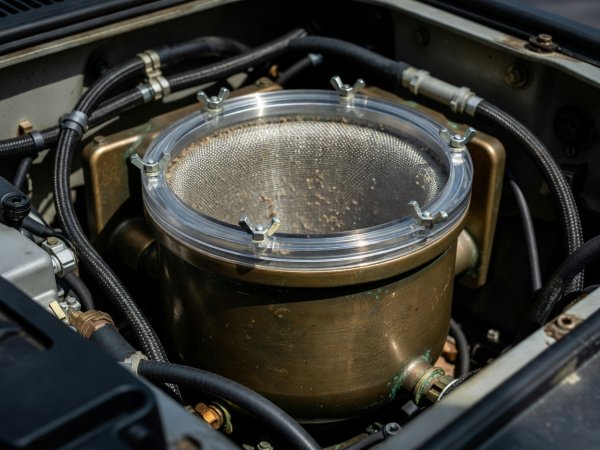
Close-up of a bronze marine raw-water strainer with transparent inspection lid inside an engine bay Engine Bay

Strainer Baskets & Exhaust Elbows

Clear eelgrass and barnacle shells from the raw-water basket. Inspect the cast-iron exhaust mixing elbow every few seasons for internal carbon build-up or salt scale that restricts water injection.
Weekly Check View Schedule ↓
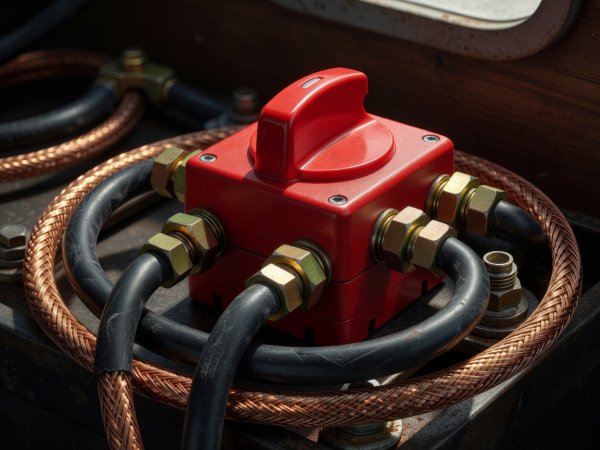
Close-up of a heavy red rotary battery isolator switch and tinned copper cables 12V DC System

Dedicated Starter & House Banks

Keep the engine starter battery electrically isolated from domestic loads (chartplotters, diesel heaters, refrigerators) via an automatic voltage-sensitive relay (VSR) and clean terminals with petroleum jelly.

Pre-Trip Check Read Electrical Notes ↓
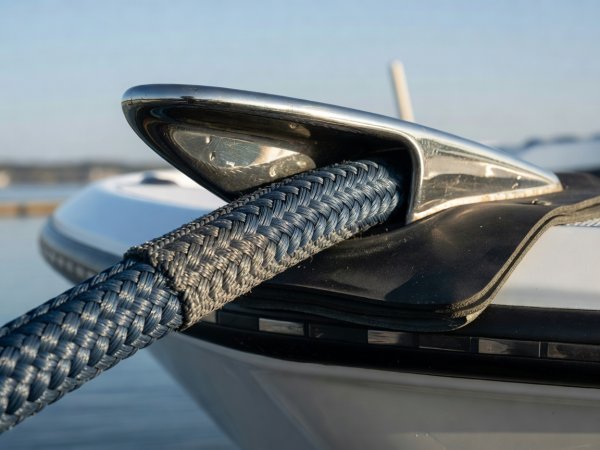
Close-up of a braided dock line protected by a woven chafe sleeve passing through a bow fairlead Deck Fittings

Cleat Backing Plates & Chafe Sleeves

Check under the foredeck to ensure mooring cleats and bow bollards have wide stainless or aluminium backing plates rather than small washers. Slide leather or polyester chafe guards over lines at rough fairleads.

Monthly Check Berthing Gear Guide →

2. Electrical Integrity and Bilge Readiness

Salt-laden air creeps into unsealed crimp connectors, causing voltage drops that reset chartplotters or weaken VHF transmission output right when entering a harbour at dusk.

Use tinned marine copper wire and adhesive-lined heat-shrink terminals for every repair onboard. Test your automatic bilge pump float switch manually before leaving the pier—not just by flipping the dashboard toggle switch—and ensure a high-capacity manual diaphragm pump with a roving suction hose is operable from the helm or cockpit. Keep the bilge clean and dry so any fresh weep of coolant, shaft gland water, or hydraulic fluid is spotted immediately.

3. Norwegian Spring Launch & Autumn Lay-Up

Because frost and snow affect every region of Norway between November and March, seasonal commissioning (vårpuss) and winterization (vinteropplag) follow a strict sequence:

Inspect all thru-hull fittings (skroggjennomføringer) for dezincification (pinkish discoloration on brass fittings—replace questionable brass with DZR bronze or composite Marelon). Apply biocidal or silicone foul-release coatings strictly within designated boatyard containment pads, replace sterndrive bellows according to manufacturer intervals, and leave the boat in the travel-lift slings for ten minutes after splashdown to verify zero weeping around the shaft seal or transducer.

Pressure-wash the underwater hull immediately upon lifting while slime is still wet. Change engine crank oil and gear lube while warm so acidic combustion by-products or emulsified water do not sit against bearings over winter. Flush the raw-water cooling circuit thoroughly with fresh water followed by non-toxic propylene glycol antifreeze, empty domestic water heaters and deck showers completely, and support the winter tarpaulin frame (opplagsstativ) with sturdy A-frames pitched steeply enough to shed wet coastal snow.

Remove the propeller at least once a season to check for discarded monofilament fishing line wrapped behind the thrust washer. Monofilament melts into the rubber prop-shaft lip seal, allowing seawater to enter the gearbox and emulsify the gear oil. Grease the splines with water-resistant marine grease and install a new stainless cotter pin.