Distinguishing Guidance from Live Harbour Data: This guide explains physical berthing methods, standard hardware, and regional marina characteristics across Norway. Because guest piers adjust seasonal capacity, harbour fees, and payment apps each spring, always verify live berth availability, depth alongside, and current tariffs directly on the harbour's noticeboard or official municipal channel upon arrival.
Understanding Norwegian Mooring Configurations
Unlike Mediterranean marinas with laid lazy-lines, Norwegian guest harbours rely on four distinct mooring setups depending on tidal range, basin width, and bottom geology. Having your deck hardware rigged before entering the harbour basin allows the skipper to focus entirely on windage and prop walk.
1. Floating Finger Pontoons (Utriggere)
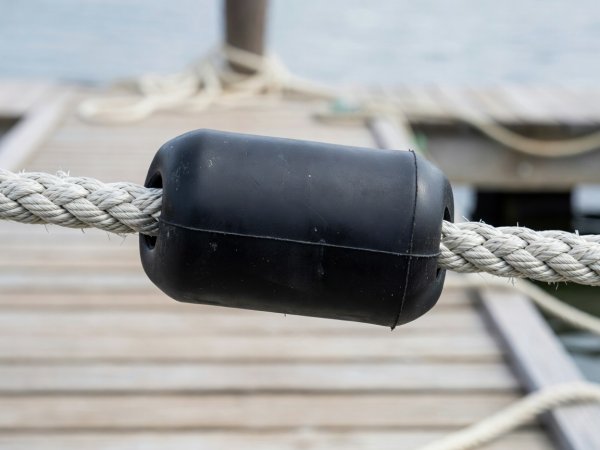
Common across the Oslofjord, Sørlandet, and modern town marinas in Western Norway, floating concrete or timber pontoons use tubular steel fingers (utriggere) extending perpendicular to the main walkway. Walkable fingers usually feature welded cleats or loops every two metres, while narrow tubular booms require clipping or tying lines directly around the steel rail. Because floating docks rise and fall with the tide, you can tie bow, stern, and both spring lines snugly using rubber mooring snubbers (rykkdempere) to absorb wind gusts.
2. Stern Buoy and Bow-to-Pier (Bøyefortøyning)
Where basins are narrow or deep, harbours place a row of orange or steel mooring buoys 15 to 25 metres off the quay. As you approach your chosen gap, clip a dedicated buoy hook (bøyekrok) or thread a long floating line through the buoy's top ring, pay out slack as you motor gently forward, and step ashore from the bow pulpit with two bow lines. Ensure your stern line cannot foul the propeller when reversing out at departure.
3. Fixed Quay Walls & Tidal Ranges
In Southern Norway (Kristiansand to Arendal), the astronomical tidal range rarely exceeds 30 centimetres, meaning wind pressure dictates water levels more than the lunar cycle. North of Stadlandet, through Trøndelag, Helgeland, Lofoten, and Finnmark, tidal ranges expand to between 2.5 and 4 metres. When mooring alongside a fixed timber or stone fish-landing quay in Northern Norway, never tie short vertical lines; use long fore-and-aft springs and tend them across the tide, or choose a floating guest pontoon instead.
4. Rafting Alongside (Longside i Utenpåligging)
During July peak weeks in towns such as Risør, Kragerø, Stavern, or Bekkjarvik, guest piers frequently require rafting two or three boats deep where permitted by harbour signage. Always match or step down in vessel weight when rafting outside another craft, rig your own shore lines forward and aft to the dock cleats so your weight does not pull on the inner boat, and cross only over the foredeck—never through an occupied cockpit.
Dockside Utilities and Practical Checks
When stepping ashore at a municipal or boat-club marina, check the following utility points before leaving the boat unattended:
- Shore Power Pedestals: Norwegian marinas use blue 3-pin 16A / 230V IEC 60309 sockets protected by residual current devices (RCD / jordfeilbryter). Connect the cable to the boat inlet first, then to the shore pedestal, and lock the retaining collar so rain cannot enter. Never daisy-chain domestic indoor extension leads in a damp cockpit.
- Freshwater Standpipes: Many coastal islands rely on subsea water pipes with limited pressure. Use dock water sparingly, disconnect your hose immediately after filling your tank, and never submerge the dock hose nozzle into a bilge or toilet bowl.
- Fuel Bunkers (Drivstoffanlegg): Marine diesel (avgiftsfri diesel) and 95-octane petrol pumps are often located on a separate service pier outside the quiet sleeping basin. Because E10 petrol attracts moisture over time, small-boat owners using outboards frequently carry a water-separating funnel and check fuel turnover at smaller seasonal stations.
- Waste & Septic Pump-Out: Look for sorted recycling cabins on the root of the pier for household waste, used engine oil filters, and old batteries. Municipal pump-out stations (tømmestasjoner) use standard ISO deck fittings; carry a conical rubber adapter nozzle onboard to ensure an airtight vacuum seal.
Using Natural Outharbours (Uthavner)
One of the defining joys of Norwegian small-boat cruising is mooring directly to glacially smoothed granite islands under the outdoor access law (allemannsretten). Regional recreational boating councils (Friluftsråd) and motorboat associations maintain thousands of white-painted iron bolts (festeringer) and wooden landing steps in sheltered coves from Hvaler to Nordland.
When approaching an outharbour, drop a 10–15 kg Bruce, Delta, or traditional folding grapnel anchor 30 to 40 metres off the rock face over sand or clay, pay out weighted lead-core line (blytau) or chain as you ease the bow in, and test the holding in reverse before tying your bow lines to the shore bolts. Leave a slack loop on the stern line with a weight hung mid-span so the boat can be pulled three metres clear of the rock face overnight in case a passing ship wake rolls into the cove.
 Skagerrak & Oslofjord